Collection: Carbide Chamfer Mills, Reamers & Countersinks for CNC Machining
Precision carbide chamfer mills, reamers and countersinks for CNC machining, deburring, and hole finishing.
This collection includes carbide chamfer mills, precision reamers, and countersinks used in CNC machining for edge finishing, hole sizing, and screw seating. These tools are commonly used in aluminum, plastics, composites, and other machinable materials where clean edges and accurate hole geometry are required.
Although these tools may look similar, each serves a different purpose in machining operations. Selecting the correct tool depends primarily on the operation being performed and — in the case of chamfers and countersinks — the required included angle.
Tool Types in This Collection
-
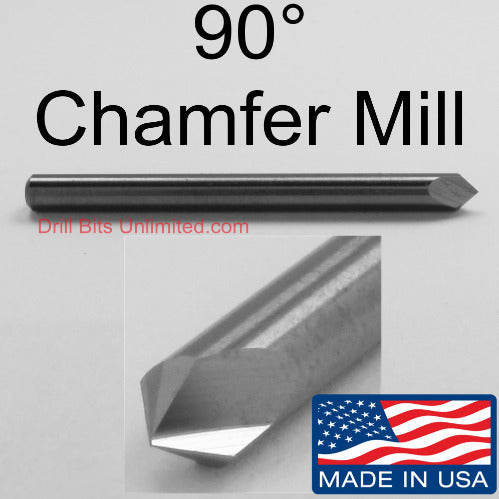
Chamfer Mills – Used for deburring edges, breaking sharp corners, and creating controlled chamfers on machined parts. Chamfer mills are commonly used in CNC milling to produce consistent beveled edges and lead-ins for drilling or tapping operations.
-
Countersinks – Designed to create a conical recess so flat-head screws sit flush with the material surface. Common angles include 82° for imperial fasteners and 90° for metric fasteners.
-
Reamers – Precision finishing tools used after drilling to bring holes to an exact diameter while improving roundness, straightness, and surface finish. Reamers typically remove only a small amount of material from a pre-drilled hole.
How to Choose the Correct Tool
-
Need a screw head to sit flush?
Use a countersink and match the angle to the fastener (for example 82° for inch screws).
-
Breaking sharp edges or adding a bevel?
Use a chamfer mill. The included angle determines the chamfer profile.
-
Need a precise finished hole diameter?
Use a reamer after drilling to achieve accurate size and improved surface finish.
Important Machining Notes
- Chamfer mill and countersink angles must match the application to produce the correct geometry.
- Use conservative feeds and speeds when deburring or chamfering to minimize chatter and heat buildup.
- Lightly chamfering the entrance of a drilled hole can improve tool entry before reaming operations.