Collection: 2 Flute Carbide End Mills
2 flute carbide end mills provide a good balance of chip clearance and cutting control for plastics, aluminum, brass, copper, and other non-ferrous materials. Many feature a 1/8" shank for small CNC routers and desktop mills.
Need help choosing flute count? Compare 2-flute vs. 3+ flute end mills.
Need starting feeds & speeds? Use the carbide end mill feed & speed calculator.
-
0.1250" / 1/8" TiN-Coated 2-Flute Square End Mill, .670" LOC, 1/8" Shank M2-185
Regular price $6.99 USDRegular priceSale price $6.99 USD -
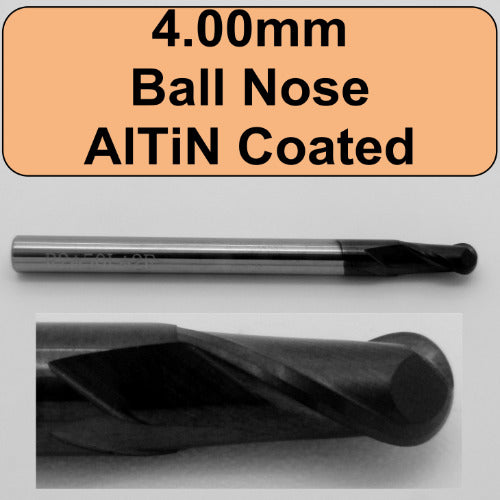
0.1575" (4.00mm) x .330" LOC AlTiN Coated 2-Flute Ball Nose Carbide End Mill, 5/32" Shank | MB-260
Regular price $9.95 USDRegular priceSale price $9.95 USD -
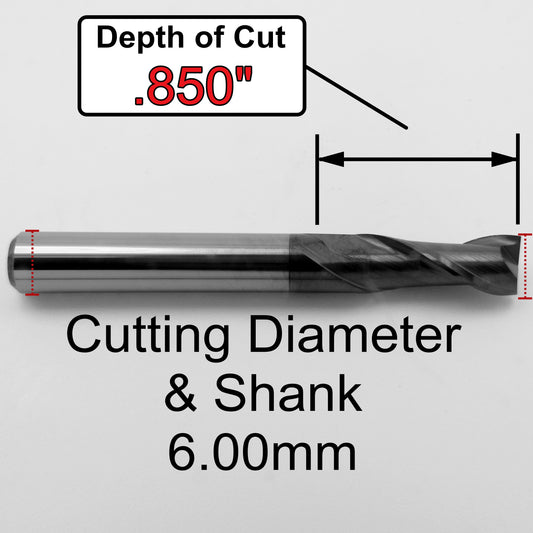
0.2362" (6.00mm) x .850" LOC 2-Flute Square End Carbide End Mill | M2-220
Regular price $8.45 USDRegular priceSale price $8.45 USD -
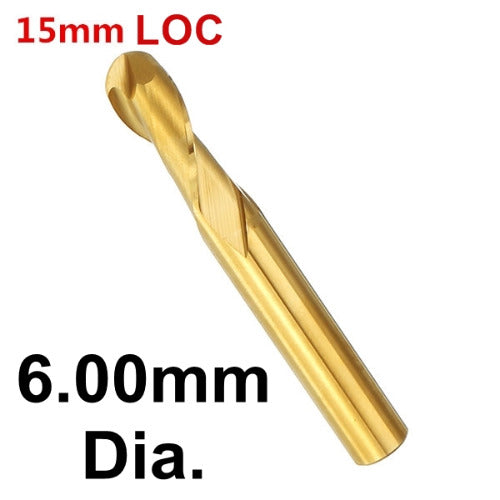
0.2362" (6.00mm) x 15mm LOC TiN Coated Ball Nose Carbide End Mill | MB-280
Regular price $9.99 USDRegular priceSale price $9.99 USD -
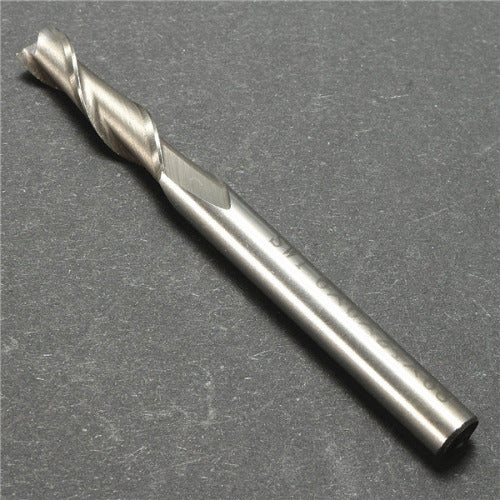
0.2362" (6.00mm) x 24mm LOC 2-Flute Square End HSS End Mill | M147
Regular price $6.49 USDRegular priceSale price $6.49 USD -
0.2362" (6.00mm) x 9mm LOC 2-Flute Square End Carbide End Mill, 6mm Shank | K175
Regular price $17.95 USDRegular priceSale price $17.95 USD -
0.2500" (1/4") x 1.00" LOC 2-Flute Down-Cut Solid Carbide End Mill – 1/4" Shank |M2-230
Regular price $19.95 USDRegular priceSale price $19.95 USD
About 2 Flute Carbide End Mills
Two-flute carbide end mills are a versatile choice when chip clearance, cutting control, and clean results are important. With fewer flutes than higher-flute-count tools, they provide larger chip spaces that can be especially useful in softer materials and smaller CNC applications.
Where 2-Flute End Mills Work Well
Two-flute end mills are commonly used for slotting, profiling, pocketing, and general milling in plastics, aluminum, brass, copper, and other non-ferrous materials. Many of the tools in this collection have a 1/8" shank and are well suited for desktop CNC mills, small CNC routers, prototyping, and precision machining.
Why Choose 2 Flutes
Two-flute geometry provides a useful balance between chip evacuation and cutting stability. Compared with higher-flute-count tools, the larger flute spaces help clear chips efficiently, particularly in softer or chip-forming materials.
Up-Cut vs. Down-Cut
Up-Cut: Pulls chips upward and generally provides strong chip evacuation. It is commonly used when efficient chip removal is the priority.
Down-Cut: Pushes chips downward and can help maintain a cleaner top edge on the workpiece. It is useful where top-surface finish is especially important.
Choosing Length of Cut (LOC)
Choose an LOC appropriate for the actual cutting depth. For through-cuts, the cutting length should extend beyond the material thickness. For slots, pockets, grooves, or partial-depth cuts, choose an LOC deep enough for the required cut while avoiding unnecessary cutting length, since longer tools generally have less rigidity.
Related End Mill & Tooling Options
Looking for value-priced tooling?
Browse our Value Tool Deals collection for lightly used tools, factory-resharpened tooling, and surplus carbide tools offered at reduced prices.
Need a different cutting direction or geometry?
Browse all end mill styles to find up-cut, down-cut, single-flute, O-flute, ball-nose, corner-radius, and other carbide end mill styles.